On this page
As the construction industry increasingly prioritizes energy efficiency and environmental sustainability, the development and application of advanced building materials have become a central industry focus. Glass wool, serving as a highly efficient and eco-friendly thermal insulation material, is playing an increasingly vital role in modern construction. Its exceptional performance and versatile application scenarios have firmly secured its position in the building materials market.
1. Basic Characteristics of Glass Wool
Glass wool is an inorganic fibrous material manufactured primarily from glass through high-temperature melting and centrifugal blowing processes.
- Exceptional Properties: It boasts numerous advantages, including lightweight construction, low thermal conductivity, excellent acoustic absorption, non-combustibility, corrosion resistance, and anti-aging properties, making it an ideal green building material.
- Health and Safety: Furthermore, glass wool is asbestos-free and harmless to human health, meeting the stringent safety and environmental standards of modern construction.
2. Application in Wall Insulation Systems
Against the backdrop of vigorously promoting energy-efficient buildings, glass wool is widely utilized in wall insulation systems.
- Energy Efficiency: Its superior thermal insulation properties effectively reduce winter heat loss and summer heat gain, thereby significantly lowering air conditioning and heating energy consumption.
- System Integration: Glass wool boards or batts are typically used in conjunction with facing layers, adhesives, and anchors to form a complete exterior wall insulation system. This is highly suitable for both new constructions and energy-saving retrofits of existing buildings.
3. Roof and Floor Thermal and Acoustic Insulation
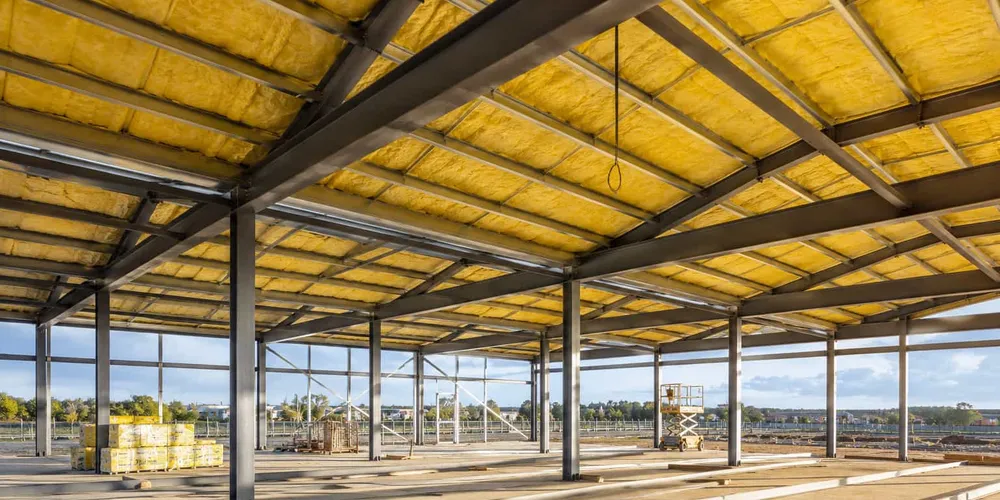
In roof insulation projects, glass wool is frequently used as the primary insulation layer due to its outstanding thermal performance and a certain degree of water resistance and breathability.
Metal and Concrete Roofs
It can be seamlessly installed under metal roofing panels or on top of concrete roofs to provide highly effective thermal insulation.
Inter-Floor Soundproofing
In residential and commercial buildings, glass wool is also extensively applied between floor structures as an acoustic and thermal insulation layer. It not only effectively blocks sound transmission between upper and lower floors but also enhances the thermal comfort of the flooring, vastly improving the overall quality of the living environment.
4. Insulation for HVAC Ducts and Industrial Equipment
In central air conditioning and large-scale ventilation systems, glass wool pipe sections or boards are the standard, go-to insulation materials. They effectively prevent the formation of condensation on duct surfaces, maintain optimal system operational efficiency, and drastically reduce energy loss.
5. Future Prospects in the Building Materials Market
As the construction industry’s demands for energy efficiency and environmental protection escalate, the market demand for glass wool is growing steadily year by year. Driven particularly by green and energy-efficient building initiatives, glass wool has incredibly broad market prospects.
Many domestic and international construction projects have already adopted glass wool as their primary thermal, acoustic, and soundproofing material, further promoting its widespread application in the construction sector. Furthermore, advancements in technology have further enhanced the performance of new glass wool materials. These new materials not only deliver superior thermal insulation but have also optimized their manufacturing processes and environmental friendliness. These innovations will undoubtedly drive the widespread adoption of glass wool in the construction industry, meeting ever-growing market demands.
Conclusion
Glass wool provides the construction industry with diverse solutions ranging from thermal and acoustic insulation to fire resistance and anti-corrosion, significantly enhancing both building comfort and safety. It is undoubtedly one of the critical materials for the future of sustainable development and green construction.