On this page
When selecting thermal and acoustic insulation materials, glass wool is often the first option that comes to mind. However, truly understanding its ideal application scenarios is essential for maximizing its effectiveness. This comprehensive guide will help you navigate the key points often overlooked during the selection process, covering everything from core performance metrics to essential installation accessories.
1. Why is Glass Wool the Preferred Choice for Insulation?
Glass wool’s consistent popularity in both construction and industrial sectors stems from three core characteristics:
- Structural Fiber Advantages: The porous structure formed by interwoven ultra-fine glass fibers effectively blocks heat transfer while simultaneously absorbing sound wave energy. This dual functionality makes fireproof and soundproof glass wool a universal choice for walls, ductwork, and various other applications.
- Outstanding Safety Profile: Unlike standard insulation materials, centrifugal glass wool features a high melting point and is non-combustible. Critically, it will not release toxic gases when exposed to an open flame.
- Broad Adaptability: Available in various densities, glass wool products can cover a wide range of temperature scenarios, from cold storage facilities operating at -20°C to industrial pipelines reaching 100°C.
It is important to note that maximizing these advantages heavily depends on appropriate product selection and correct installation methods. The ultimate performance ceiling of glass wool is often dictated by the weakest link in the construction process.
2. How Key Performance Indicators Affect Real-World Application
When evaluating the quality of glass wool, do not be misled by superficial thickness or color. The true parameters that determine the material’s service life include:
- Density and Thickness: High-density products offer strong compressive resistance, making them ideal for load-bearing roofs. Low-density materials are better suited for filling irregular cavities. For instance, while ultra-fine glass wool appears highly fluffy, products with a density above 48 kg/m³ practically provide superior thermal insulation.
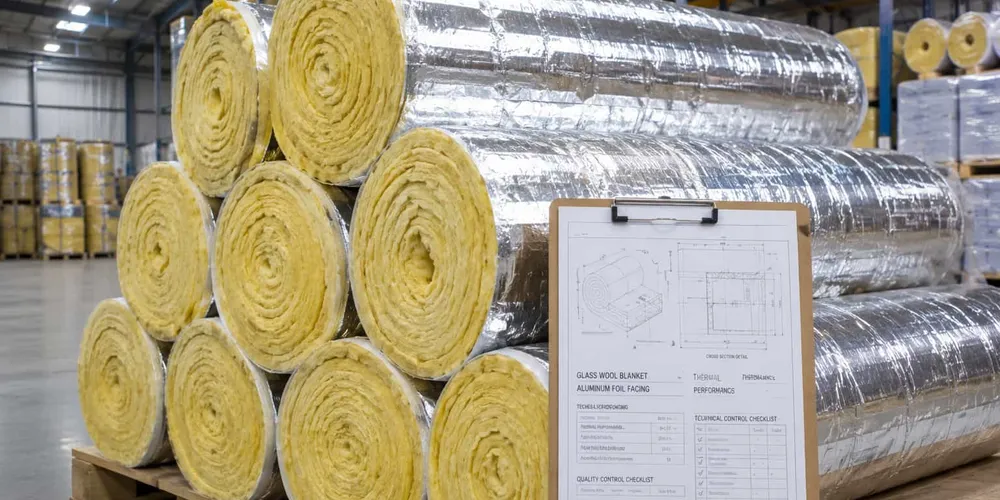
- Facing Treatments: Bare glass wool is prone to fiber shedding. Glass wool boards equipped with aluminum foil or fiberglass cloth facings not only provide moisture resistance but also reflect heat, making them particularly vital for humid environments.
- Hydrophobicity (Water Repellency): Standard glass wool products will clump when exposed to water, whereas premium glass wool boasts a hydrophobicity rate of over 98%. This metric is exceptionally critical for outdoor engineering projects.
3. Selecting the Right Glass Wool for Your Project
Different forms of glass wool are engineered for entirely different construction scenarios. Selecting the wrong type can lead to compromised performance or even require complete rework:
Glass Wool Blankets (Rolls)
- Application: Large-scale flat surface installations, such as roofs and walls.
- Advantages: The 6-meter-long rolls significantly reduce the number of seams, while the 1.2-meter width perfectly aligns with standard stud framing spacing.
- Pro Tip: Installing glass wool blankets with staggered joints effectively disrupts sound bridges.
Glass Wool Boards
- Application: Broad architectural engineering fields.
- Specifications: Standard densities range from 32 to 48 kg/m³, with thicknesses between 25 and 150 mm. The standard dimension is 1200 x 600 mm, though custom cutting is widely supported to adapt to specific engineering requirements.
4. Essential Accessories for Installation
Many contractors focus solely on the primary material and fail at the accessory level. These supporting components directly impact the final installation quality:
- Fixing Systems (Insulation Pins): A minimum of 8 pins per square meter is required. Utilizing L-shaped glass wool pins prevents the insulation from rotating and loosening over time.
- Support Bands: For large-span spaces, utilizing a steel wire mesh is necessary for proper load bearing.
5. Overlooked Details in Installation and Maintenance
Seemingly minor operations during the construction phase drastically affect maintenance costs over the next decade:
- Cutting Allowance: Always reserve a 3 cm expansion allowance to ensure the material is not crushed or deformed during temperature fluctuations.
- Moisture Prevention: Prior to installation during rainy seasons, spray the material with a water-repellent agent to prevent the fibers from absorbing moisture and clumping.
- Inspection Channels: For pipeline insulation, leave a removable section every 6 meters. Secure this section with rubber insulation glue to facilitate repeated opening and closing for maintenance.
- Waste Disposal: When removing old glass wool, spray it with water first to suppress dust, and ensure all scraps are sealed in dedicated disposal bags.