On this page
In both the construction and industrial sectors, thermal insulation and soundproofing are crucial aspects of engineering design. As building technologies advance and demands for comfortable, energy-efficient environments increase, glass wool is gaining immense traction as a highly efficient insulation and acoustic material.
This article explores its core characteristics, extensive application areas, and strategic ways to fully leverage its best performance in your upcoming projects.
1. Core Characteristics of Glass Wool
Glass wool is a lightweight insulation material manufactured from recycled glass fibers, offering several superior physical properties:
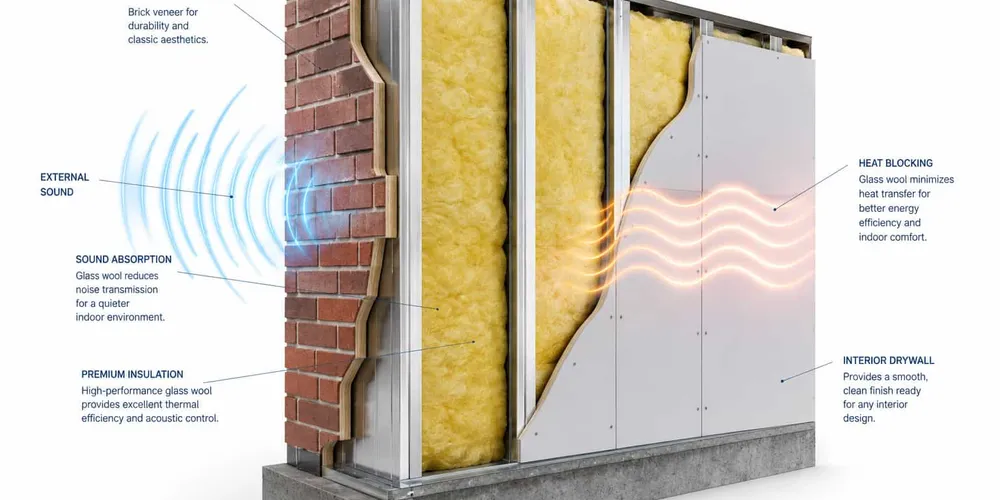
- Excellent Thermal Insulation: With its remarkably low thermal conductivity, glass wool effectively minimizes heat transfer. This ensures buildings remain warm in the winter and cool in the summer, significantly optimizing energy consumption.
- Superior Acoustic Performance: Thanks to its dense, interwoven fiber structure, glass wool efficiently absorbs sound waves and reduces noise transmission, making it ideal for environments requiring strict quietness.
- Fire Resistance: It acts as a highly effective fire barrier, preventing the spread of flames and drastically reducing fire-related risks in commercial spaces.
- Lightweight and Easy to Process: Its low bulk weight makes it highly workable, easy to handle, and quick to install across various complex structural scenarios.
2. Key Applications for Thermal and Acoustic Insulation
The Construction Industry
Within the construction sector, glass wool is frequently utilized for wall, roof, and floor insulation. It is particularly popular in high-rise buildings and corporate offices to boost energy efficiency and block external urban noise.
- Wall Insulation: Adding glass wool to exterior and interior wall cavities significantly increases the building’s thermal resistance, cuts overall energy consumption, and lowers HVAC operational costs.
- Roof Insulation: Roofs are a primary area for structural heat loss. Installing glass wool here not only maintains stable indoor temperatures but also helps extend the lifespan of outer roofing materials by mitigating extreme temperature fluctuations.
- Floor Soundproofing: In multi-story and high-density buildings, it effectively dampens impact noise generated from upper floors, significantly enhancing overall living and working comfort.
The Industrial Sector
Glass wool is equally critical for insulating heavy industrial equipment and reducing operational noise. It improves systemic energy efficiency while ensuring a safe, quiet work environment for factory personnel.
- Pipeline Insulation: It is widely applied to thermal and high-temperature steam pipelines to minimize energy loss and protect sensitive equipment from ambient temperature changes.
- Machinery Soundproofing: When installed as acoustic enclosures near heavy machinery, its sound-absorbing properties drastically reduce workplace noise pollution, safeguarding worker health.
3. How to Select the Right Glass Wool
To maximize performance, you must select the appropriate glass wool specifications based on your specific engineering needs. Consider the following critical factors:
- Thermal Conductivity: Always opt for products with the lowest possible thermal conductivity to achieve optimal insulation results.
- Thickness: The physical thickness of the blanket or board directly dictates its thermal and acoustic capabilities. Choose a thickness that aligns with the structural depth and performance targets of your project.
- Density: Higher-density glass wool generally yields superior soundproofing results, though the material’s overall weight must be factored into structural load-bearing calculations.
- Fire Rating: Ensure the selected material strictly complies with local fire safety and building codes to guarantee safe long-term occupancy and use.
Conclusion
As a highly efficient thermal and acoustic solution, glass wool plays an irreplaceable role across construction and industrial applications. Its exceptional performance profile and eco-friendly nature make it the preferred material for countless engineering projects, delivering significant, long-term benefits in both residential comfort and industrial safety.