On this page
NBR PVC pipe insulation is commonly used on chilled water systems because its flexible closed-cell structure can reduce heat gain and limit water-vapor movement when the material, thickness, and joints are correctly designed. The insulation also fits elbows, valves, branches, and equipment connections more easily than many rigid products.
The foam alone does not guarantee a dry pipe. Condensation control depends on the chilled water temperature, ambient temperature and humidity, surface finish, insulation thickness, pipe supports, and continuity of every seam. This guide explains how project buyers and HVAC contractors should evaluate the complete system.
Why Chilled Water Pipes Need Insulation
Chilled water pipes normally operate below the temperature of the surrounding air. Without suitable insulation, the system absorbs heat from the room, adding load to the cooling plant. The cold pipe surface can also fall below the air’s dew point, allowing moisture to condense and drip.
Heat Gain Affects Cooling Efficiency
Heat that enters a chilled water line must be removed again by the cooling system. Insulation slows this heat flow. The real result depends on the material’s design thermal conductivity, installed thickness, pipe size, operating temperature, and surrounding conditions.
Condensation Can Damage Nearby Areas
Dripping water can stain ceilings, damage finishes, wet other materials, and create unsafe walking areas. Moisture that reaches the pipe surface may also contribute to corrosion under insulation. A cold-service design therefore needs both thermal control and effective vapor control.
What Is NBR PVC Pipe Insulation?
NBR PVC pipe insulation is a flexible foam product made from a nitrile rubber and PVC-based material system. Manufacturers commonly supply it as tubes, sheets, or rolls for HVAC, refrigeration, plumbing, and industrial applications. Exact composition and performance must be confirmed from the product data sheet.
How the Closed-Cell Structure Works
In closed cell elastomeric pipe insulation, the foam contains many small cells that are largely separated from one another. Trapped gas helps resist heat flow, while the cell structure limits the path available for water vapor. This is useful on below-ambient piping, but open seams or damaged surfaces can still allow moisture into the system.
Why Flexibility Helps on Pipework
Flexible tubes can cover common pipe sizes with fewer fabricated sections. Sheets can be cut for large pipes, valves, vessels, and irregular fittings. The material can follow changes in direction, but flexibility should not be used as a reason to stretch, thin, or compress it during installation.
Chilled Water Pipe Condensation Control
Chilled water pipe condensation control works by keeping the outer insulation surface above the local dew-point temperature and limiting water-vapor entry toward the cold pipe. Both conditions must be maintained across straight runs, fittings, supports, and terminations.
Dew Point Changes With Room Conditions
Dew point is the temperature at which moisture in the air begins to condense. It rises when ambient humidity increases. A thickness that performs in a dry office ceiling may be insufficient in a humid plant room, pipe shaft, loading area, or building with frequent outdoor-air infiltration.
Seams Are Part of the Vapor-Control System
Longitudinal seams, butt joints, valve closures, and sheet edges need full contact and the approved adhesive or closure method. Tape should not be used to hide an open joint below it. Even a small gap can expose a cold surface and create a local condensation point.
Supports Need Continuous Protection
Pipe supports are common weak points because the insulation may be compressed or interrupted. The design should use compatible load-bearing inserts, support details, and vapor seals where required. Metal hangers should not create an uncontrolled thermal bridge to the cold pipe.
Choosing Chilled Water Insulation Thickness
Chilled water insulation thickness cannot be selected from pipe diameter alone. Designers also need the fluid temperature, pipe material, ambient dry-bulb temperature, relative humidity, surface emissivity, thermal conductivity, wind or air movement, and the required safety margin.
Use a Project-Specific Calculation
ISO 12241:2022 provides calculation rules for heat-transfer-related properties of building equipment and industrial installations. Local energy codes, project specifications, and the authority having jurisdiction may add other requirements. Buyers should request the calculation basis instead of relying on one universal thickness chart.
Compare Conductivity at the Same Temperature
Thermal conductivity changes with mean temperature and can differ by grade. Two quoted values are comparable only when the test method, mean temperature, specimen, aging condition, and units are consistent. The selected thickness should use the design value applicable to the real service condition.
Allow for Humid and Exposed Locations
High humidity can require greater thickness to keep the surface above dew point. Outdoor systems may also need UV-resistant coatings, jackets, or cladding. Protective finishes must remain compatible with the foam and should not crush or puncture it.
Chilled Water Pipe Insulation Installation
Chilled water pipe insulation installation should create a continuous dry system with closed joints and full coverage. Good workmanship is as important as the material selection because cold surfaces quickly reveal gaps and incomplete fitting details.
Prepare Pipes Before Insulating
Pipe surfaces should be clean, dry, and suitable for the specified adhesive system. Dirt, oil, rust, and moisture can weaken bonding or become trapped under the insulation. Any coating requirements should be resolved before the work begins.
Do Not Stretch the Foam
Stretching a tube around an oversized pipe reduces wall thickness and places stress on the seam. Heavy compression also changes the installed geometry. Installers should use the correct internal diameter and fabricate fittings without pulling the material beyond the supplier’s instructions.
Seal Elbows, Tees, and Valves
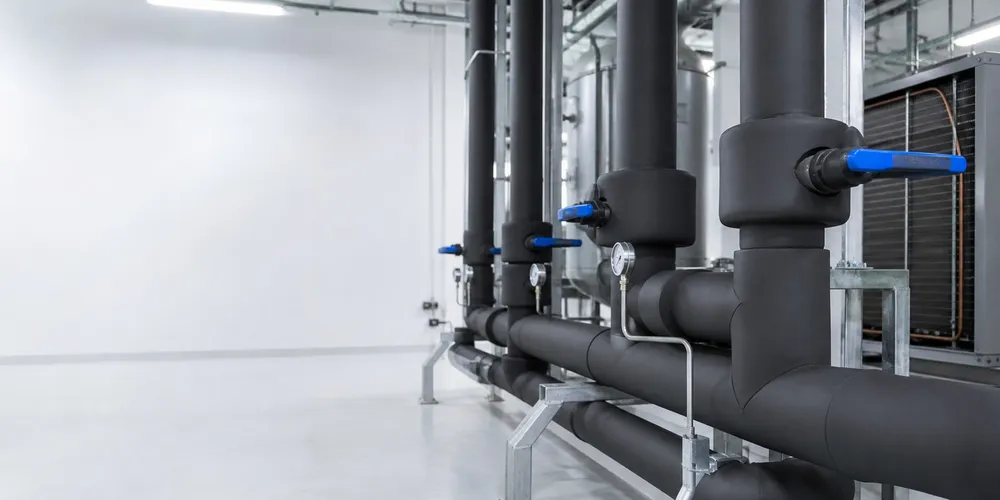
Elbows, tees, reducers, flanges, valves, gauges, and branches require careful cutting. Pieces should meet without exposed metal or open channels. Maintenance items may need removable closures that can be restored to their original thermal and vapor-control condition after service.
Inspect Before Concealment
The completed insulation should be checked before ceilings, jackets, labels, or equipment panels make it difficult to reach. Inspectors should look for open seams, exposed metal, damaged surfaces, compressed supports, loose closures, and incomplete penetrations.
Buyer Checks Before Ordering
Project buyers should provide the supplier with:
- Pipe material, outside diameter, and total length.
- Chilled water supply and return temperatures.
- Ambient design temperature and relative humidity.
- Required insulation thickness or calculation criteria.
- Indoor, outdoor, concealed, or exposed location.
- Quantities of elbows, tees, valves, flanges, and supports.
- Required coatings, facings, adhesives, and closure materials.
- Destination-market test reports and documentation needs.
Verify the Exact Product Evidence
Ask for thermal conductivity with its test temperature, water-vapor transmission data, dimensional tolerances, density, service-temperature range, and required fire-performance documents. Reports should identify the product, thickness, facing, and test standard. Category-level claims do not replace evidence for the supplied grade.
Frequently Asked Questions
Is NBR PVC Suitable for Chilled Water Pipes?
NBR/PVC elastomeric foam is commonly used for chilled water pipes when its declared temperature range, thickness, vapor performance, fire classification, and installation system match the project.
Does Closed-Cell Foam Stop All Condensation?
No material stops condensation automatically. The design must keep the outer surface above dew point and maintain sealed joints, fittings, supports, and terminations.
How Is Insulation Thickness Selected?
Thickness is calculated from pipe and ambient conditions, material conductivity, surface properties, and project requirements. One standard thickness is not suitable for every climate or plant room.
Are Separate Vapor Barriers Always Required?
The answer depends on the product, assembly, environment, and project specification. Some elastomeric systems rely on their closed-cell structure, while exposed or demanding locations may require additional protection.
Can Elastomeric Sheets Cover Valves?
Yes, suitable sheets can be fabricated around valves and irregular components. The detail must keep the insulation continuous and allow required maintenance access.
What Should Importers Send With an Inquiry?
Importers should send pipe sizes, temperatures, humidity conditions, thickness requirements, fitting quantities, protection needs, and required documents. Kingsenda can use this information to match available formats to the inquiry, while final approval remains with the project designer and local authority.
Conclusion
NBR PVC pipe insulation can provide effective thermal and condensation control for chilled water systems when the complete installation is designed correctly. Thickness calculations, closed seams, protected supports, compatible accessories, and inspection determine whether the system remains dry and efficient. Buyers should compare product-specific evidence and installation details, not material names alone.