On this page
Rubber plastic insulation materials are highly regarded in the B2B engineering sector for their outstanding performance and ease of use. This guide will explore their primary benefits and provide a clear, step-by-step construction overview for HVAC duct insulation.
1. Top Advantages of Rubber Plastic Insulation
Rubber plastic insulation materials offer the following core advantages:
- Excellent Thermal Insulation: With a remarkably low thermal conductivity (0.032~0.035 W/m·k), it effectively reduces heat conduction, significantly improving the thermal insulation effects of buildings and mechanical equipment.
- Superior Waterproof Performance: The material naturally features excellent waterproofing capabilities, effectively preventing moisture penetration and enhancing the long-term durability of the building.
- High Flexibility and Elasticity: It possesses a high degree of softness and elasticity, allowing it to adapt to shifts in the building’s structure. This improves installation flexibility and minimizes potential damage caused by structural deformation.
- Strong Corrosion Resistance: Rubber plastic insulation demonstrates reliable corrosion resistance against various chemicals, including acids and alkalis, making it highly suitable for use across diverse and harsh environmental conditions.
- Lightweight: The material is generally very light, which facilitates easy transportation and installation while simultaneously reducing the dead load on the building itself.
- Easy to Process: It is incredibly easy to cut and process on-site. It can be custom-tailored precisely according to project needs, ensuring broad applicability.
2. Standard Insulation Installation Process
Performing insulation construction with rubber plastic materials is remarkably straightforward. Taking the application of rubber plastic insulation boards on HVAC air ducts as an example, the specific construction process is as follows:
- Surface Preparation: Before beginning the insulation construction, thoroughly clean the surface of the air duct to ensure it is completely free of dust, water stains, and other debris.
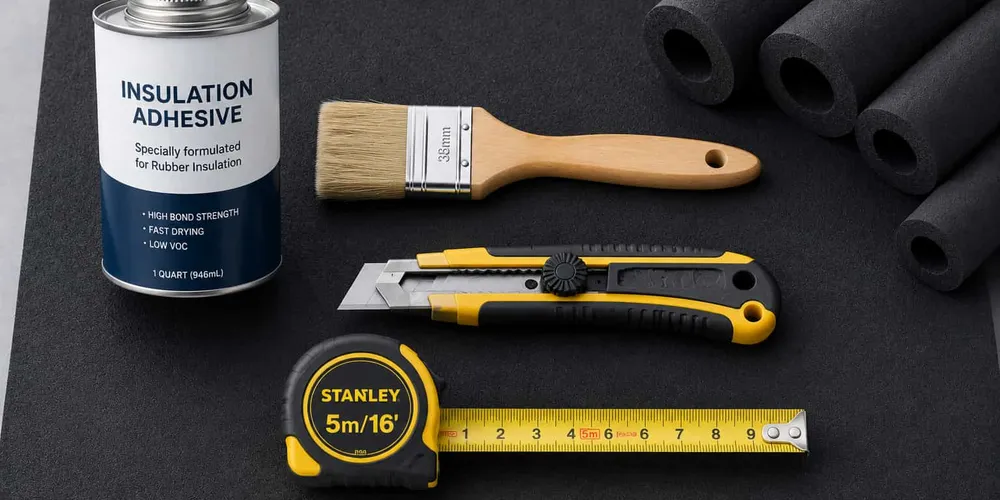
- Measurement and Cutting: Based on the actual dimensions of the air duct, use professional measuring tools to accurately measure the required size of the rubber plastic insulation board. Cut the material precisely to ensure it will fully and seamlessly conform to the duct’s surface.
- Adhesive Application and Bonding: Using the tailored rubber plastic board, apply a specialized adhesive or glue according to the shape and size of the duct. Firmly fix and bond the material in place, ensuring a tight, gap-free adhesion between the insulation board and the duct surface.
- Custom Fitting for Complex Areas: For duct connections, elbows, or other specially shaped sections, piece together and cut the rubber plastic boards into matching geometric shapes. This ensures that the insulation layer completely covers the area without any thermal bridges.
- Inspection and Site Cleanup: Once the installation is complete, thoroughly inspect the air ducts to ensure that no insulation boards are peeling off and that there are no air leaks. After confirming everything is flawless, perform the final cleanup to ensure the construction site is neat and tidy.
Conclusion
With its comprehensive benefits—including superior thermal and acoustic insulation, waterproof and moisture-proof capabilities, corrosion resistance, lightweight nature, excellent resilience, and convenient installation—rubber plastic insulation is widely applied across central air conditioning, construction, chemical engineering, pharmaceuticals, and piping insulation sectors.