industrial piping
Petrochemical Refinery Process Piping High-Low Temperature Insulation System
Recent
Project Background
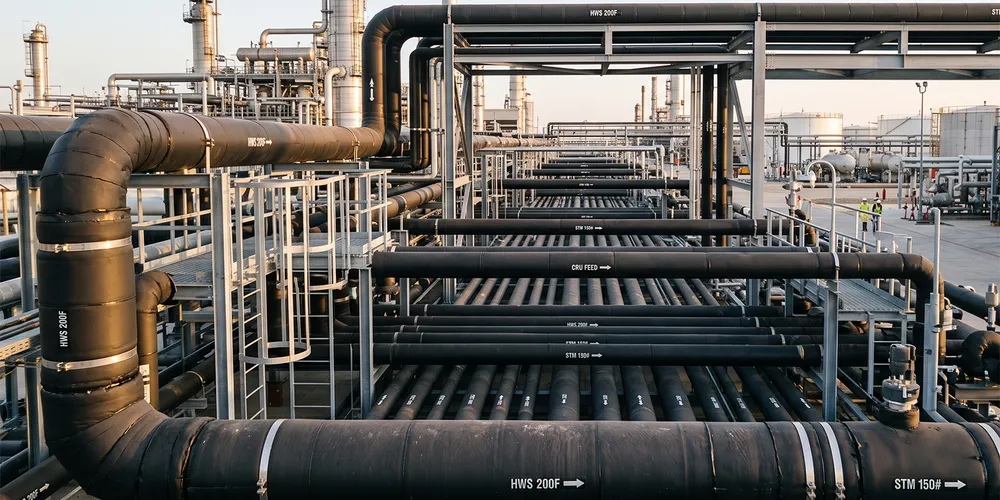
This case focuses on a major petrochemical expansion plant. The facility’s production workshop runs a highly complex matrix of chemical process piping, featuring extreme temperature dynamics: high-temperature reaction lines reaching up to 200°C running parallel to low-temperature refrigeration lines transporting refrigerants at -20°C.
The Challenge
Industrial chemical infrastructure demands heavy-duty insulation performance:
- Dual Extreme Temperatures: Materials must possess a wide service temperature range without thermal structural cracking.
- Corrosion Under Insulation (CUI): Chemical environments easily cause moisture entrapment between the pipe surface and insulation, leading to catastrophic pipeline corrosion.
- Severe Chemical Exposure: The insulation layers are constantly exposed to ambient chemical vapors and mechanical impacts.
Our Solution
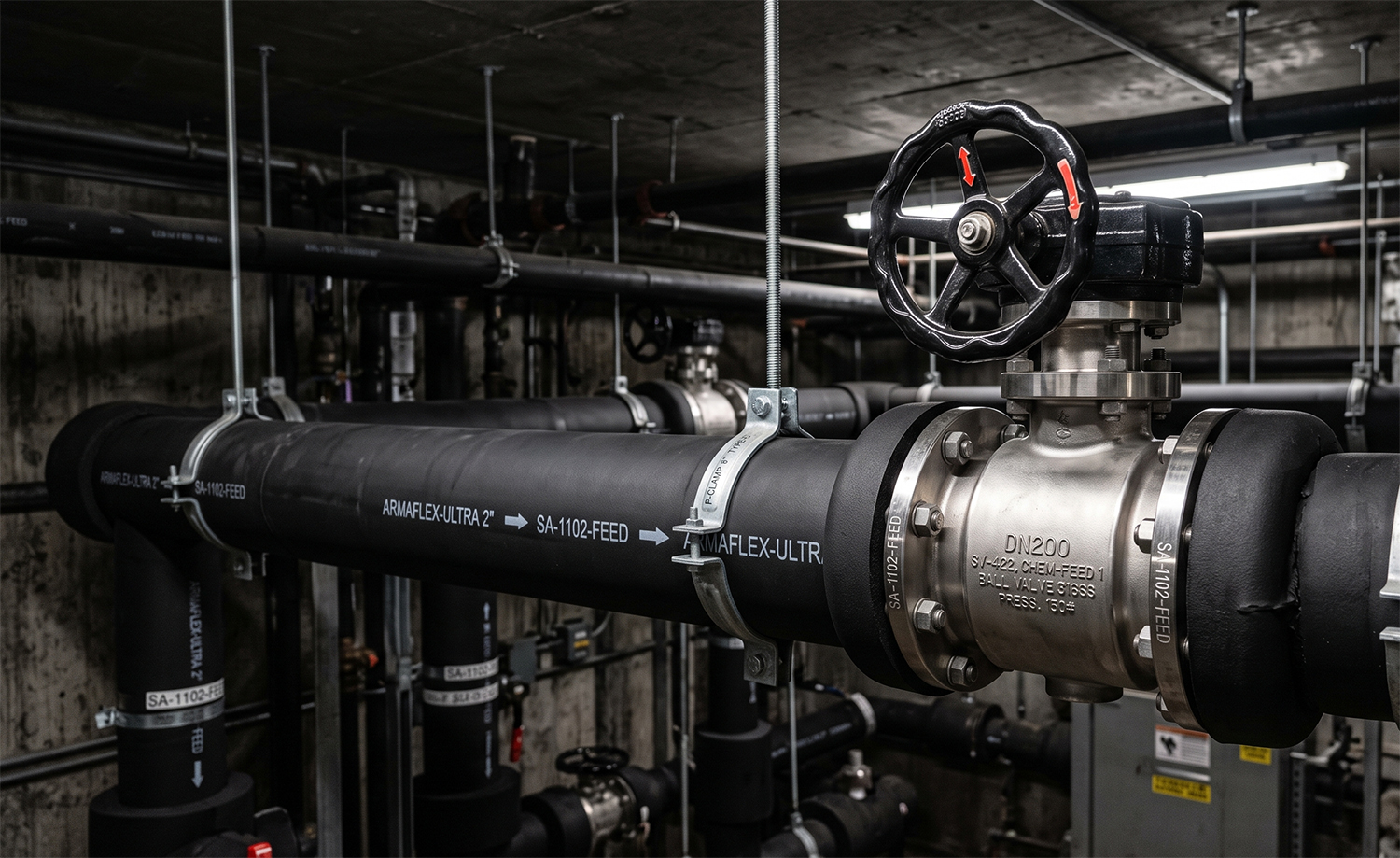
We deployed our specialized Heavy-Duty Industrial Rubber Insulation Pipes and Sheets.
- Wide Temperature Resilience: Our advanced elastomeric formulation maintains its cellular structural integrity from -50°C up to +105°C natively, coupled with high-temperature glass wool matrices for the 200°C lines.
- CUI Mitigation Strategy: The absolute zero-permeability barrier of the closed-cell rubber prevents external ambient chemical moisture from accessing the carbon and stainless steel pipe substrates.
- Excellent Chemical Resistance: The outer layer features enhanced resistance against oils, acids, and alkaline vapor exposures common in petrochemical processing zones.
The Result
- 20% Reduction in Industrial Energy Costs: The refinery achieved stable process temperatures with minimal thermal loss, directly reducing fuel and cooling energy loads.
- Substantial Maintenance Savings: By completely preventing surface condensation on the -20°C lines, the facility eliminated rust development, dropping pipeline maintenance costs by 35%.
- Enhanced Plant Safety: Surface touch temperatures on high-heat lines were brought down to safe levels, protecting refinery operators from accidental burn hazards.