steel structure
Large-Scale Cold Chain Logistics Center Steel Envelope & Piping Insulation Project
Recent
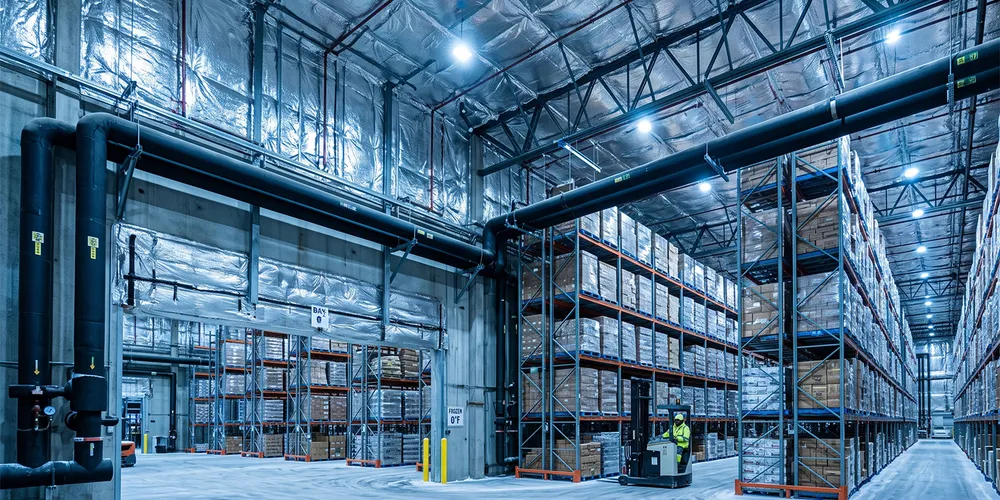
Project Background
Cold chain logistics warehouses are among the most energy-intensive commercial structures. This project involved a major regional cold chain distribution center designed to store fresh agricultural produce and frozen meat products, requiring constant interior temperatures strictly regulated between $-18^\circ\text{C}$ and $-23^\circ\text{C}$.
The Challenge
- Massive Thermal Pressure: The colossal temperature differential between the hot exterior ambient air and the ultra-cold interior creates an unyielding thermal driving force pushing heat inside.
- Moisture Infiltration: Any micro-gap in the insulation would allow humid external air to rush in, freeze, create ice buildup on the structure, and ruin the cold chain stability.
- High Operational Costs: Refrigeration compressors running 24/7 create astronomical power expenses if the envelope leaks thermal energy.
Our Solution
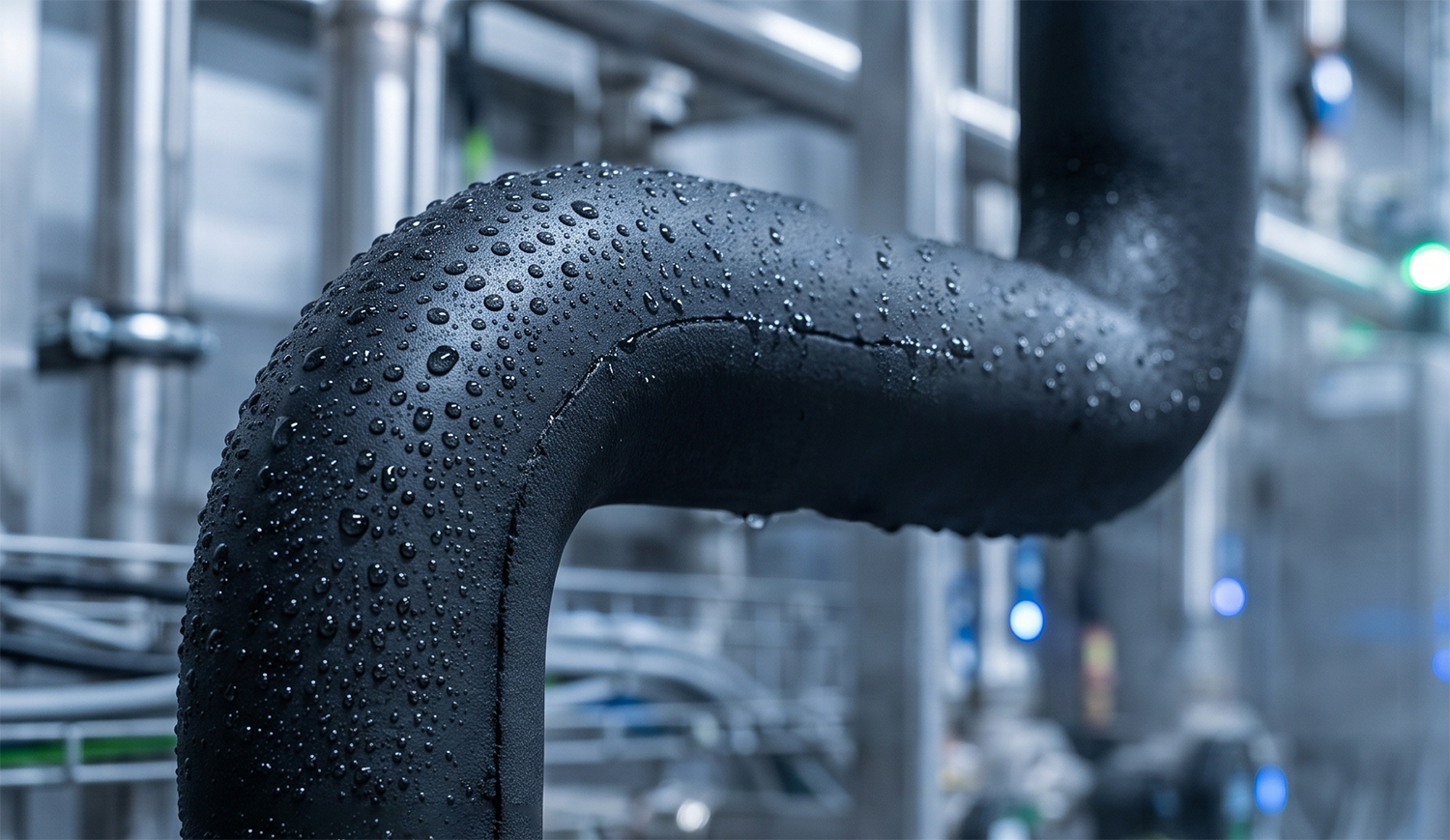
We provided a holistic insulation system utilizing High-Density Glass Wool Blankets for the double-skin metal roof structure, coupled with Thick-Walled Elastomeric Rubber Pipes for the ammonia refrigeration pipelines.
- Dual-Action Thermal Guard: The thick glass wool core minimizes radiant heat gain through the vast roof area, while the closed-cell rubber sleeves protect the hyper-cold liquid lines.
- Absolute Moisture Ingress Block: The closed-cell structure of the rubber material naturally stops moisture migration without needing extra jackets.
- Rapid Pre-Cut Construction: Materials were supplied in precise dimensions, allowing the installation teams to quickly seal the massive roof panels and lengthy pipeline racks, cutting construction timelines by 3 weeks.
The Result
- 10% Increase in Overall Refrigeration Efficiency: The facility reached its targeted blast-freeze temperatures faster and maintained them with less compressor uptime.
- Zero Ice Buildup: The structural pipe racks and roof joints remained completely free of frost and ice accumulation, protecting structural integrity.
- Extended Equipment Lifespan: By stabilizing the cooling loads, the massive refrigeration plant avoided short-cycling, substantially decreasing mechanical wear and reducing long-term facility overheads.